How StratPool works
StratPool connects people who build trading strategies with people who provide capital. Strategists publish the logic, investors state what they want, and automation runs the matched strategy on funds in the investor's own vault.
Overview
There are two sides to the marketplace, and each keeps something private:
- Strategists keep their logic. Investors see a strategy's description and metrics, never its internal flow.
- Investors keep custody. Funds stay in a vault that only the investor's wallet can withdraw from.
Step 1
Publish
A strategist builds a flow and publishes it.
Step 2
Verify
The strategy is checked before it can be used.
Step 3
Require
An investor funds a vault and posts a requirement.
Step 4
Match
The requirement is paired with a suitable strategy.
Step 5
Automate
A Chainlink workflow trades on the strategy's signals.
Strategies
A strategy is a flow of connected blocks: a trigger starts it, indicators read the market, conditions test those readings, and an action buys, sells or holds. Strategists also set where it runs (chain, pair, protocol and pool) and which assets it accepts.
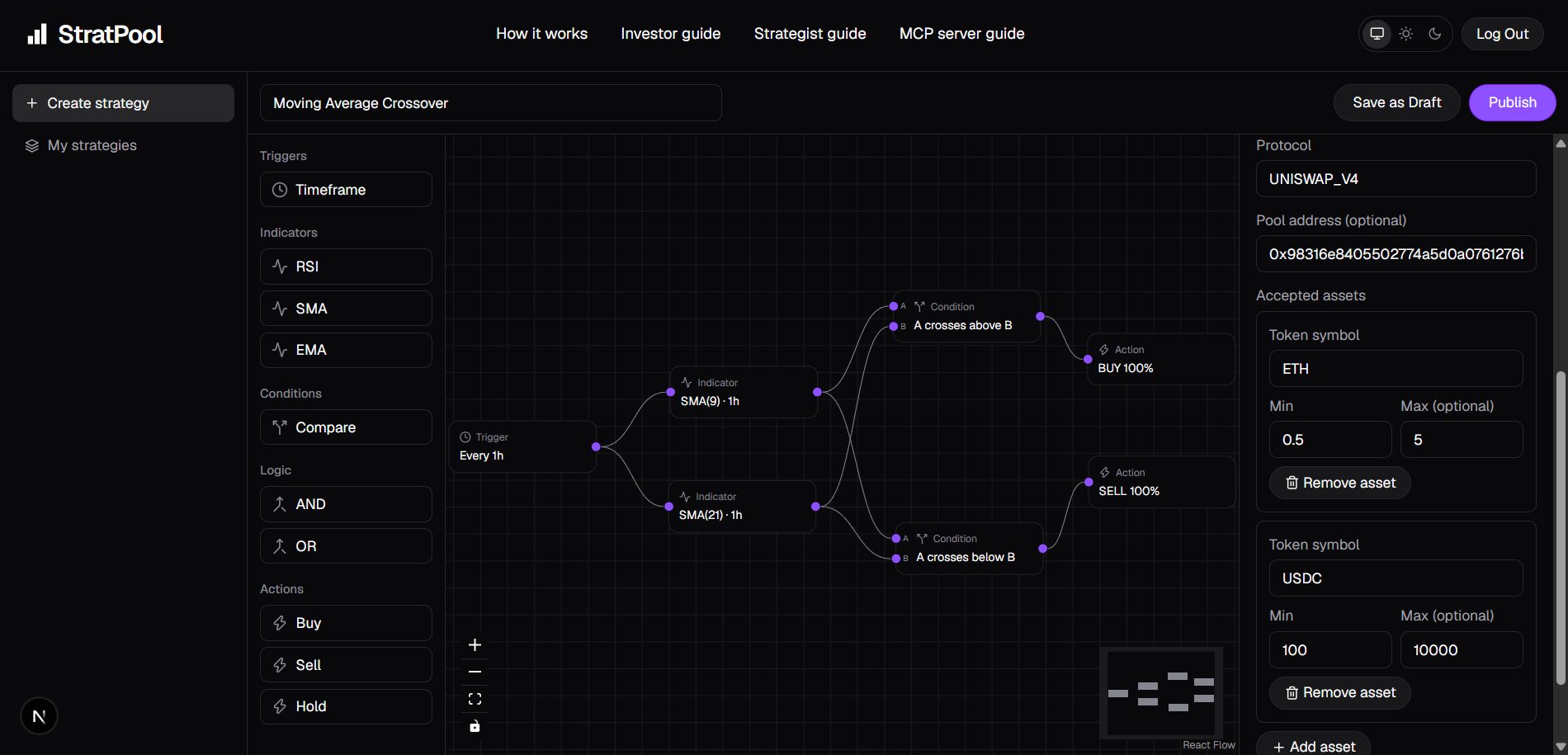
Read the Strategist guide to build one.
Vaults
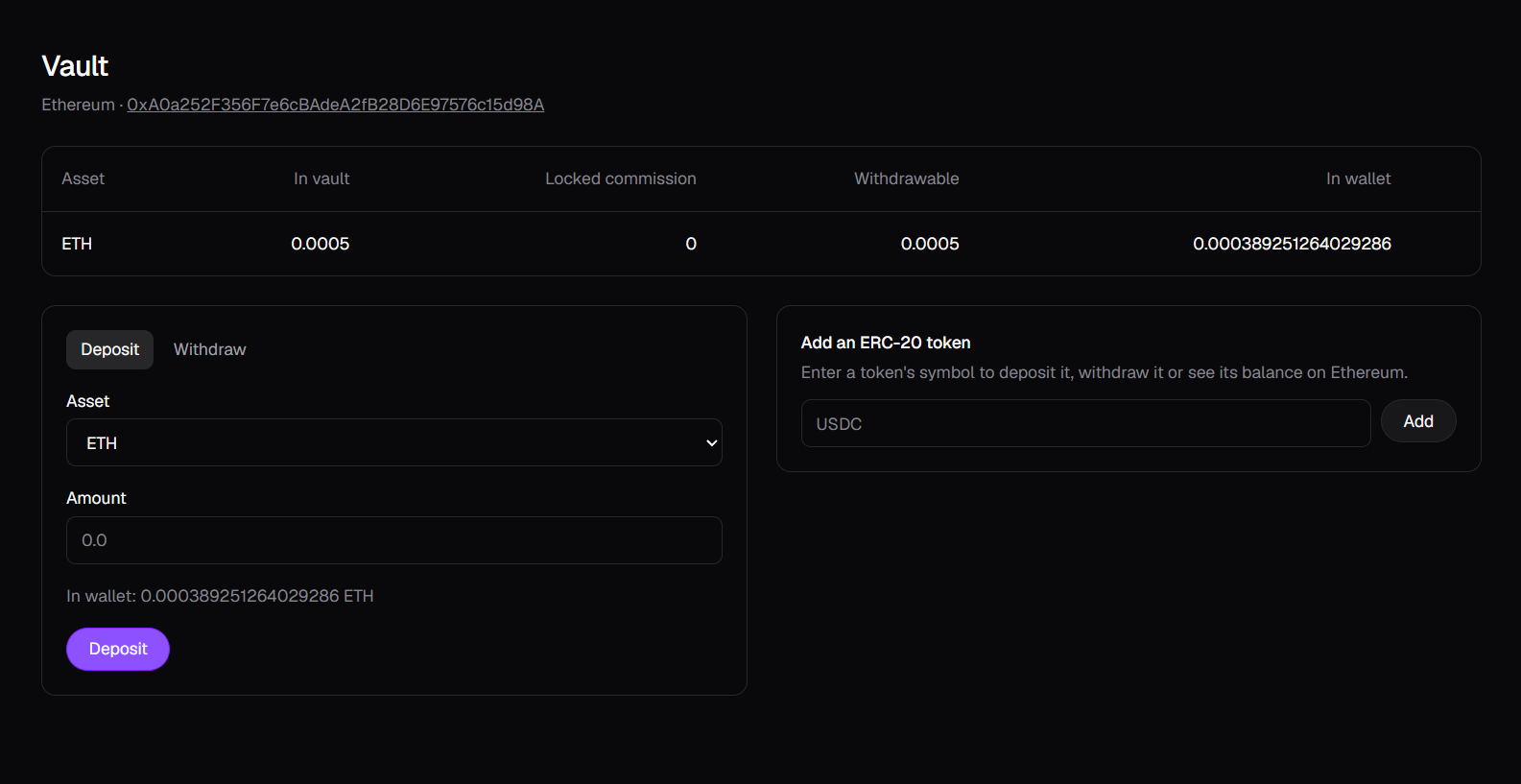
Each investor gets their own vault contract on each chain they use. Deposits go there rather than to a shared pool. Only the investor's wallet can deposit or withdraw, and automation can only swap inside the vault through the configured router.
Requirements and matching
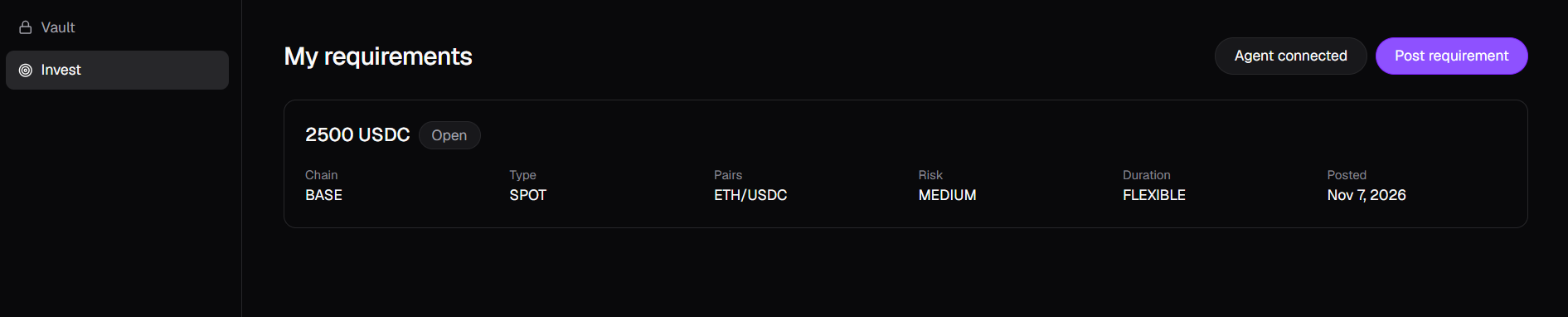
An investor describes what they want: amount, asset, chain, trading type, pairs, risk level and duration. StratPool compares that requirement with published, verified strategies and looks for a compatible one.
Once a workflow is deployed for a requirement, it shows as Strategized and its results appear on the Invest page.
Automated execution
Each match gets its own Chainlink CRE workflow. It evaluates the strategy on schedule and, when the conditions are met, sends a signed report to StratPool's CommissionManager contract, which checks where the report came from and tells the vault to make the swap.
Step 1
Evaluate
The workflow reads market data and runs the strategy.
Step 2
Report
A signed report goes to the CommissionManager.
Step 3
Swap
The vault swaps its own funds with a minimum output.
Step 4
Account
Closed positions record profit or loss on-chain.
Commission
Strategists are paid only for profit. When a trade closes a position at a profit, 10% of the realized profit goes to the strategist, in the token received. A loss pays nothing and isn't carried into later trades.
| Position cost | Proceeds | Profit | Commission | Investor keeps |
|---|---|---|---|---|
| 1,000 USDC | 1,200 USDC | 200 USDC | 20 USDC | 1,180 USDC |
| 1,000 USDC | 900 USDC | -100 USDC | None | 900 USDC |
If a payment can't reach the strategist, the investor's trade still goes through. That amount stays locked in the vault for later settlement and shows under Locked commission.
Current availability
| Area | Status |
|---|---|
| Vaults | Ethereum, Base and Sepolia. |
| Automated trading | Spot strategies on Uniswap v3 and v4 pools. Perpetuals can be selected but can't be automated yet. |
| Automatic matching and ratings | Being rolled out. Until a match is made, a requirement stays Open. |